This post may contain affiliate links. Read our disclosure policy.


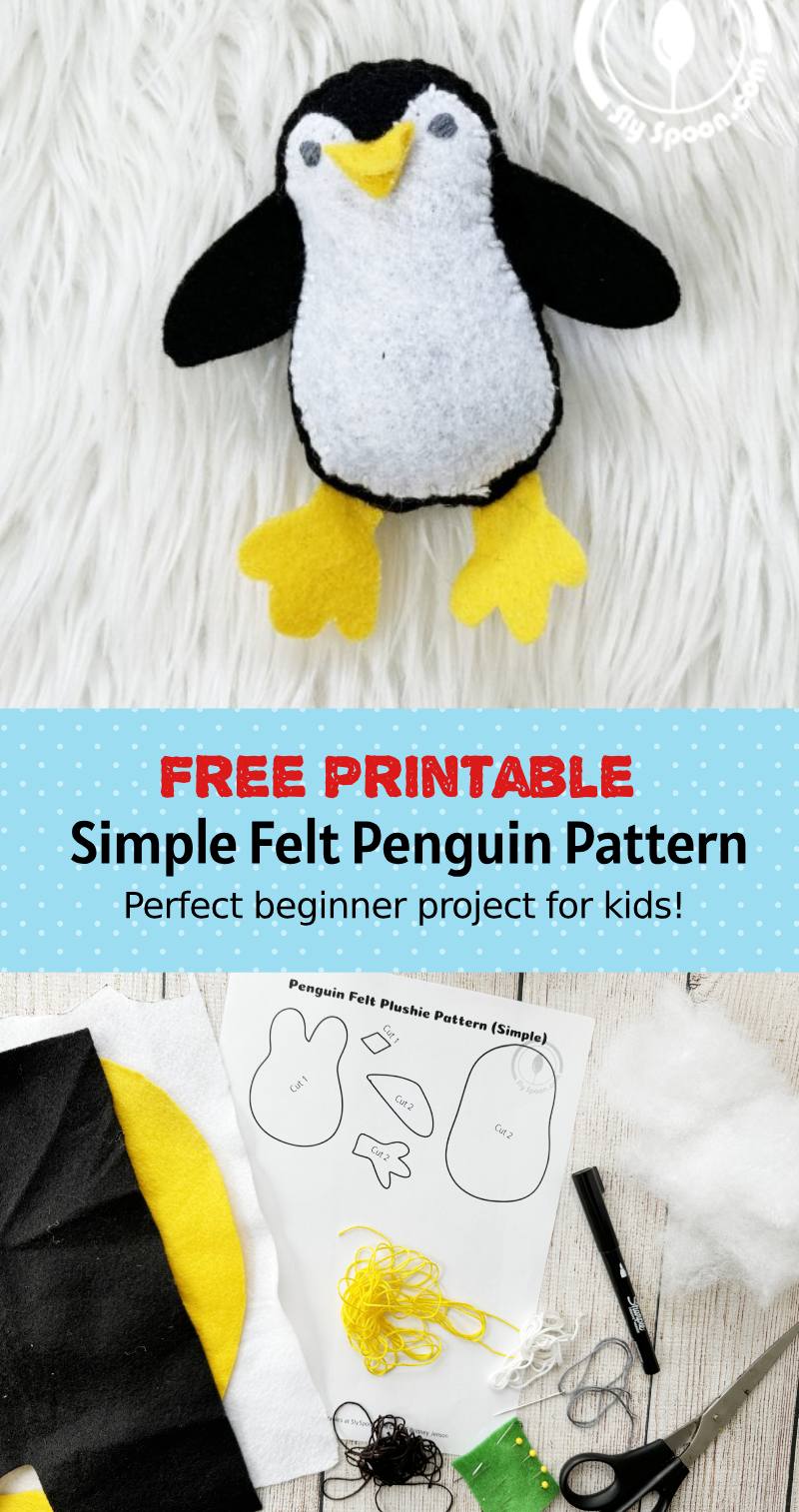
I’m thrilled to share this starter hand sewing project with you today! We’ll be crafting an adorable felt penguin that’s ideal for kids ages 6 and older (with a touch of adult guidance!). This project offers a fantastic opportunity to learn fundamental sewing skills while being both fun and not overwhelming to beginners. Are you ready to dive in? Let’s get started on our icy friend!
Want More Felt Sewing Fun?
Find more beginner-friendly felt sewing projects and step-by-step videos on my YouTube channel, Sly Sew Simple. I post new patterns, easy tips, and fun crafts for kids and grown-ups alike!
» Subscribe & Explore More
What You’ll Need:
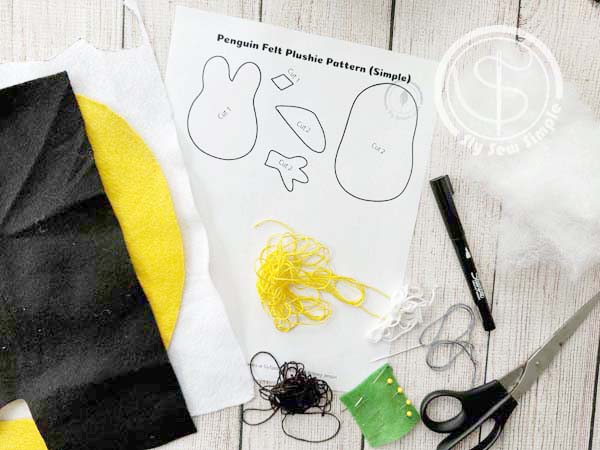
- Felt (in your chosen colors for body, belly, flippers, and beak)
- Free Penguin pattern (link below)
- Sharpie Creative Markers (or similar) for tracing
- Embroidery floss (try to match the colors to your felt)
- Needle with the big eye / Embroidery Needle (a child-friendly one works best)
- Scissors
- Stuffing (polyester filler, scrap felt, or even ripped-up plastic grocery bags)
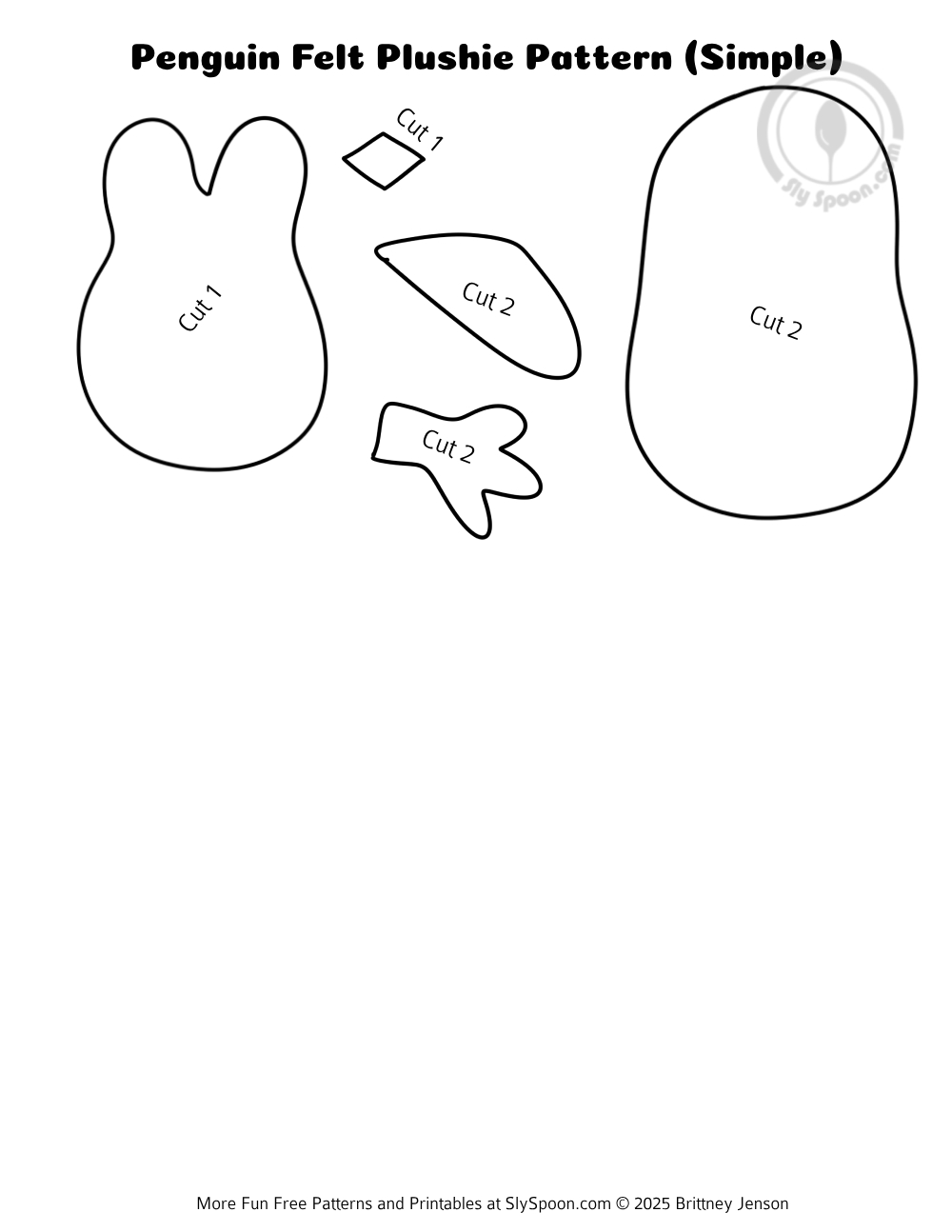
 Click image to download and print
New to Felt Sewing? 🧵
Get my FREE Beginner Felt Sewing Starter Pack! It includes 5 super-simple felt projects designed for kids and first-time sewists, plus printable patterns and easy stitch instructions.
Simple shapes, minimal pieces, and easy stitches help beginners finish a project without getting overwhelmed!
Step 1: Trace and Cut
First, download your free penguin pattern by clicking the image above, print it out, and let’s begin tracing! The pattern includes the penguin’s body, flippers, feet, beak and belly.
Position the pattern pieces onto your felt and use your fabric marker to trace around them. Be sure to flip the pieces over for any that need to be cut twice; this ensures a perfect match when you sew. After tracing, carefully cut out your felt shapes, trimming any visible marker lines where possible. Don’t throw away your scraps; they can be great for stuffing your penguin!
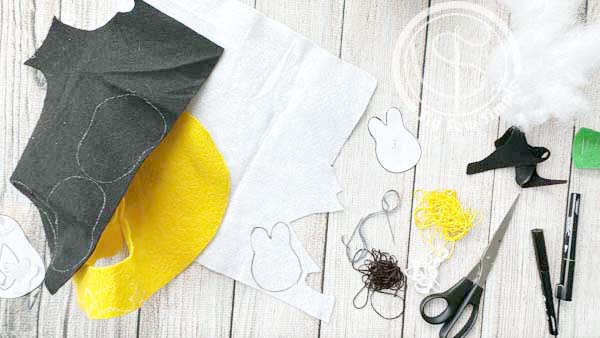
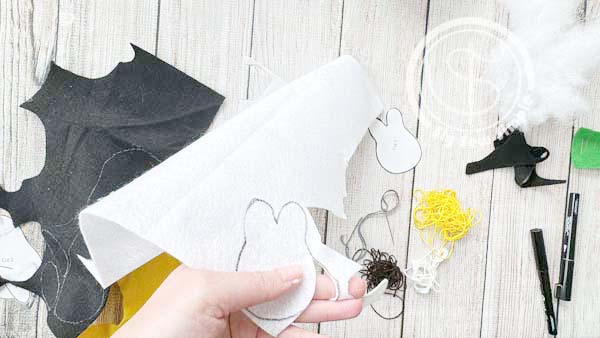
Step 2: Create the Eyes
Now it’s time to add some cute eyes and a beak! You can either use small bits of felt (perhaps in a contrasting color) for the eyes and beak or create simple stitched versions.
For a stitched version make a knot at the end of your eye color embroidery floss. Lay the white belly over the black penguin body and figure out where you want your eyes to be. Then push the needle from the back of the penguin’s body piece, through both the black and white felt, to the front where you want an eye to be. Secure it with a “knot stitch” — just pull the thread tight and tie a small knot by looping the floss and pulling it through. For larger eyes, repeat this a few times; I used 3 stitches for each eye. Do the same for the second eye, ensuring the knots are hidden inside the penguin’s body.
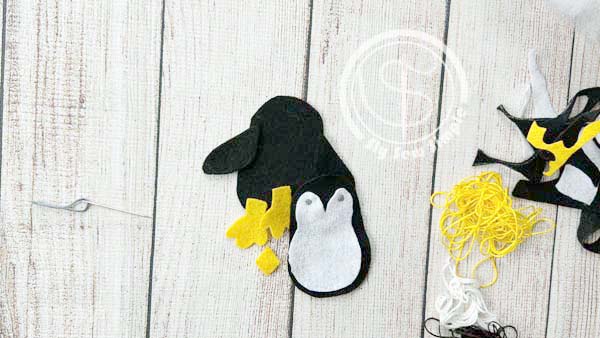
Step 3: Sew the Belly
With white sewing floss, use a whip stitch to sew the penguins belly to the black felt of the penguins front. Knot your stitch off when you go around the whole white belly.
How to Whip Stitch: To make a whip stitch, start by threading your needle with a length of sturdy thread and tie a knot at the end. Hold two pieces of fabric together, with the white felt in the center of your penguin. Begin by pushing the needle from the back of the felt, pulling it around the white felt, and pushing it into the black felt right at the edge of the white felt, keeping the stitches close to the edge. Keep repeating this by going back to the top piece, then into the bottom piece, making sure to pull the thread tight each time, until you reach the end of your stitching line!
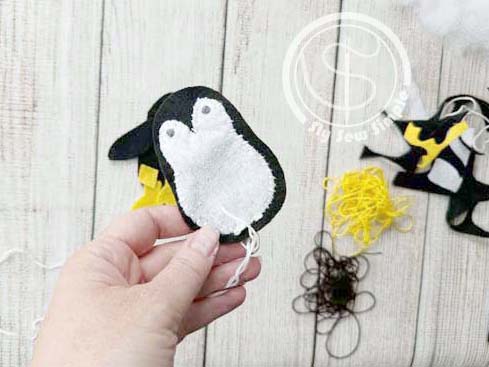
Step 4: Attaching the Beak
Next, let’s attach the beak. Lay the beak pieces on the penguin’s body under the eyes. Thread your needle again and use another simple knot stitch to secure it in position. I started with my beak folded down and did a simple knot stitch on the very top of it so my beak can still open but is mostly closed. You can also open the beak wide and do a stitch right in the middle of it, which will make it so the beak is mostly open.
Step 5: Start Sewing the Body
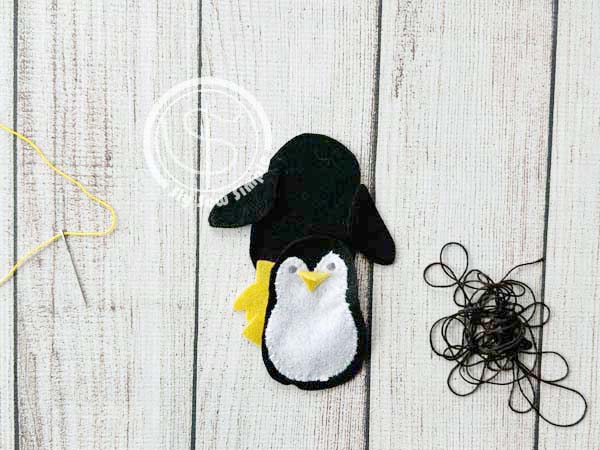
Begin sewing at the bottom side of your penguin, just past where you’ll add it’s leg. Knot your starting stitch to the side of where the flipper with be and use a blanket stitch around the bottom of the penguin’s body, pausing when you reach the point where you plan to add the wing.
How to Blanket Stitch: To make a blanket stitch, start by threading a needle with some sturdy thread and tying a knot at the end. Choose the edge of your fabric where you want to start stitching. Poke the needle up from the back of the fabric, so the knot is hidden. Pull it all the way through. Next, bring the needle back down into the fabric a little bit away from where you came up, then pull it through again. Before you pull the thread all the way tight, loop the thread around the edge of the fabric and bring the needle back through the hole where you first poked it up. Keep repeating this process, making sure to keep the stitches evenly spaced and pulling the thread tight each time, until you reach the end of your stitching line.
Step 6: Add the Wing
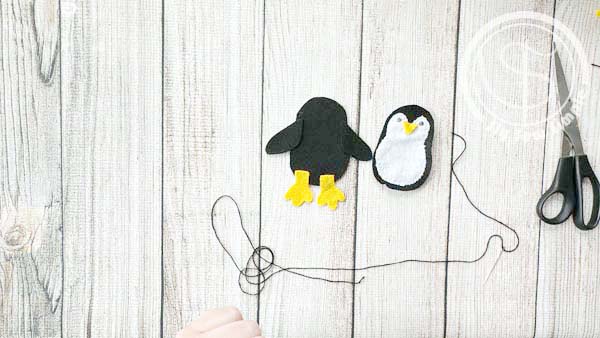
When you arrive at the side where you want to add the wing place it between the two body pieces of felt and use a running stitch to sew it in securely.
How to do a Running Stitch: To make a running stitch, start by getting your needle and thread ready with a knot at the end. Begin by pushing the needle up through the fabric from the back to the front, pulling it all the way through. Then, move the needle a little forward and poke it back down through the fabric making sure to leave a small space. Pull it through until the thread is tight. Next, poke the needle back up through the fabric right where you came down so it makes a little stitch. Keep going back and forth, moving forward a little each time and sticking the needle down and then back up, making sure the stitches are nice and straight. Continue until you reach the end of where you want to stitch!
Step 7: Continue with a Blanket Stitch
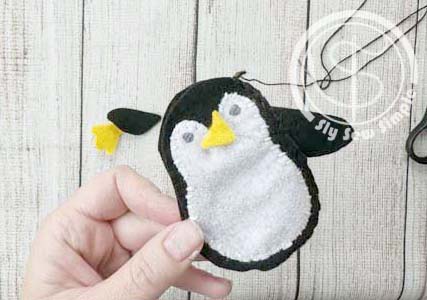
Once the wing is attached, keep going with a blanket stitch up around the penguins head, pausing when you reach the just under where his eye is, and add your second wing with a running stitch. Then continue with a blanket stitch down it’s side and pause.
Step 8: Fill and Finish
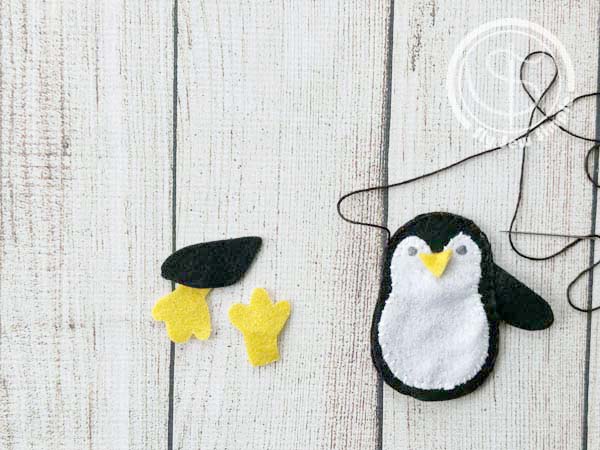
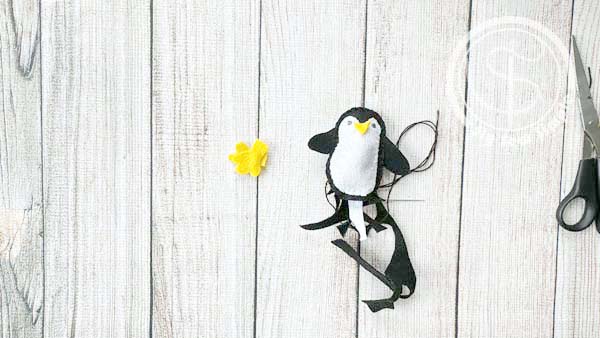
Now it’s time to add your stuffing! Use small bits of polyester filler or scrap felt for the filling; crumbled plastic grocery bags work too! For harder-to-reach areas like the head, a pencil can help push the stuffing in. Once your penguin is nicely filled, add your first foot, and use the running stitch to add it while closing up your penguin. Do a blanket stitch if you have space between the two legs, then add the second leg, again with a running stitch, pausing to push in your stuffing as need. Once you reach your first/starter stitch knot everything off securely where you started sewing.
Step 9: Enjoy!
And voilà! You’ve crafted your very own Arctic friend felt penguin! This project not only introduces kids to the fundamentals of hand sewing but also nurtures creativity and the joy of crafting. Enjoy your new penguin friend!